


- In Russia
- Saint Petersburg
- Moscow
- Golden Ring
- Kazan
- Yekaterinburg
- Irkutsk
- Vladivostok
- Nizhny Novgorod
- Petrozavodsk
- Murmansk
- Kaliningrad
- Sochi
- In Belarus
- In Armenia
- In Georgia
- In Uzbekistan
- Excursions in Moscow
- Excursions in Saint Petersburg
- Hotels in Moscow
- Hotels in Saint Petersburg
- Transfers in Moscow
- Transfers in Saint Petersburg
News
17 April 2024
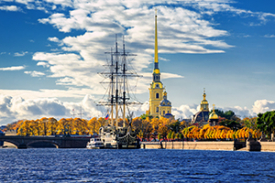
The long-awaited event for residents and guests of the city - the beginning of navigation in St. Petersburg! This year navigation will start on the 27th of April. It means that from the 27th of April it will be possible to enjoy excursions along the rivers and canals of the city again.
22 March 2024
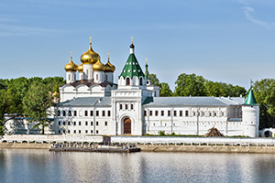
MIR Travel Company will tell you where and how to get there! The excursion is called the Golden Ring of Russia and passes through several Old Russian cities. The route itself was developed in 1967 with the inclusion of 8 cities: Sergiev Posad, Pereslavl-Zalessky, Rostov the Great, Yaroslavl, Kostroma, Ivanovo, Suzdal and Vladimir.
Petrozavodsk
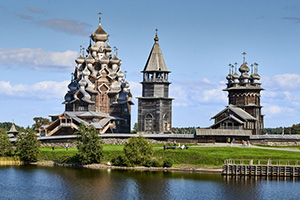 Petrozavodsk is the capital of Karelia region, situated in the northwestern part of Russia, between the White and Baltic Seas. Petrozavodsk was founded by Peter the Great in 1703 on the banks of Lake Onego, in the first place as an iron factory and quarrying center. The city has fine examples of the 18th century Neo-Vlassical architecture.
Apart from its capital, Karelia offers a wide variety of natural, cultural and historical wonders. Such as Kizhi island. This island in Lake Onego is home to an open-air museum where you can appreciate the architecture and way of life of the inhabitants of the area in past times and marvel at the world-known wooden church ensemble, included in the World Heritage List of the UNESCO.
Other important religious centers of Karelia are Valaam island with its unusual climate and arquitectural objects and legendary Solovetsky Monastery, including one of the strictest monasteries of the island with a unique lighthouse church. Where you can learn the unique history of one of the most northern monasteries of Russia, observe the massive walls and towers of the Solovetsky Kremlin, outstanding for the Middle Ages household achievements of the monastery and its austere white stone churches.
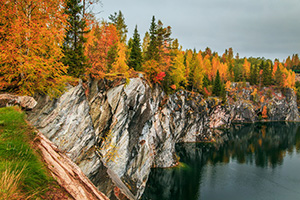 Among the natural wonders of Karelia there are at least two that can't be missed: Kivach Nature Reserve. You will get acquainted with the second highest plain waterfall in Europe and typical and rare Karelian plants. The eco system of the Kivach Nature Reserve is unique. Apart from the picturesque landscapes you will enjoy its crystal clear air. Another one is Ruskeala Mountain Park that can be reached by Ruskeala Express retro train. This is the only daily steam-powered passenger train left in Russia, which runs with a locomotive built in 1949. The gem of the park is a marble canyon, which is both a natural and an industrial sight. Ruskeala marble was mined for decorations of the St. Petersburg palaces and cathedrals. Today massive walls of grey and white color and emerald waters of the flooded centre of the canyon make it one the most visited sights in Karelia.
Besides, Karelia offers:
• Husky dog sledding. Huskies are the most human-friendly dogs in the world, so it won't take long to make friends with them. The trail is about 3 km long and goes through the picturesque Karelian pine forest.
• Mystic stone labyrinths of Bolshoy Zayatsky Island - rare and valuable archaeological monuments.